Technology

The RM range of inline mixing systems is based on proprietary and proven  technologies from Maelstrom with specific modifications for rubber materials.  Closely-controlled geometries, variable speeds and highly distributive mixing configurations provide outstanding dispersion and distribution performance.  Large contact surface area allows tight temperature control of ingredients using water or oil-based temperature control units.  Systems are optimised to process at cool temperatures, typically 60ºC to 80ºC, although higher temperature processing is also supported.
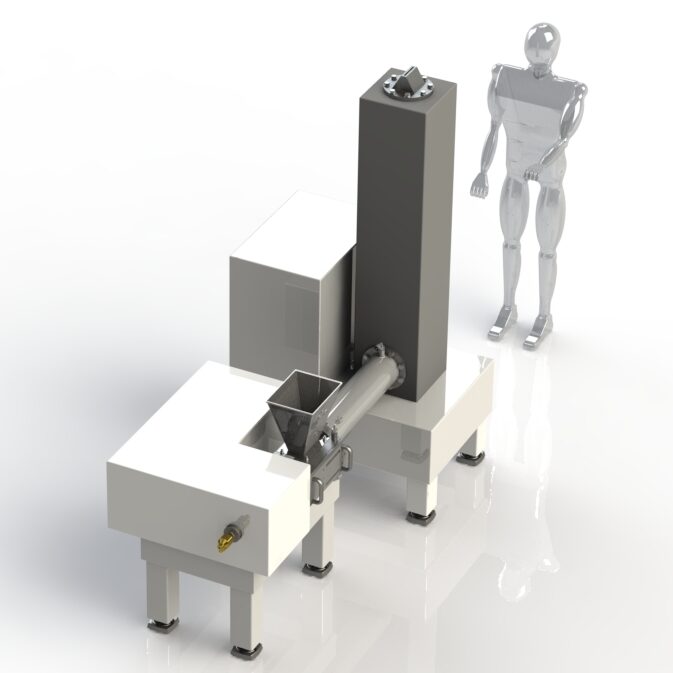
RM250-V2
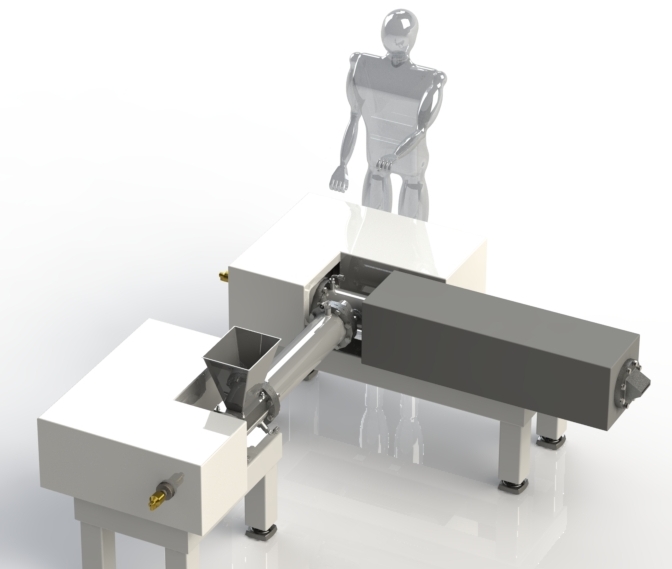
RM250-H
The RM250 system shown contains an extruder-fed 4-stage mixer with rotor and zoned stator cooling, geared motor drive and compact footprint.  It can be close-coupled to a feed or dump extruder to receive materials in strip form with a nominal 250 kg/hour throughput.  Output materials can also be in strip form.  The mixer can be either vertically or horizontally mounted, depending on space constraints.
The system has integrated controls, instrumentation and temperature control.
The larger RM1000 system has a similar configuration, but is capable of processing up to 1000 kg/hr.

What is it?

A novel continuous mixing system with:

Precise control of stressing regions

Precise control of material temperature, optimised for low temperature mixing

Ports for injection of fluids directly into mixing areas for controlled dosing and distribution

What does it offer?

Tuneable stressing in each mixing zone for:

Intense stress fields to achieve high dispersion of ingredients

Reduced stress fields to deagglomerate with minimal damage to delicate structures

Adjustment of the stress fields to suit the specific material state.

Consistent process history - all of the material sees the same stress and distribution zones

Highly effective distributive zones for:

Extreme blending of materials with minimal energy input to minimise stress history

Highly effective back-mixing to reduce inhomogeneity in material streams

Highly effective incorporation of multiple material streams having large variations in viscosity

Multiple injection ports for:

Addition of ingredients at key stage of mixing process

Controlled addition of reactive ingredients at key stages during the mixing process

Modification of viscosity during the mixing process

Low thermal inertia of mixing heads for:

Tight control of material temperatures during mixing

Independent increase or decrease of material temperature for each mixing head

Low temperature mixing, typically 60ºC to 80ºC, for very high dispersion

Pumped input and output for:

Ease of handling input materials

Thermal management of input materials

Ease of forming output materials to suit downstream processes

© Copyright 2024 Enhanced Compounds